

Bio-rescrituras. Said Dokins . Photos: Leonardo Luna
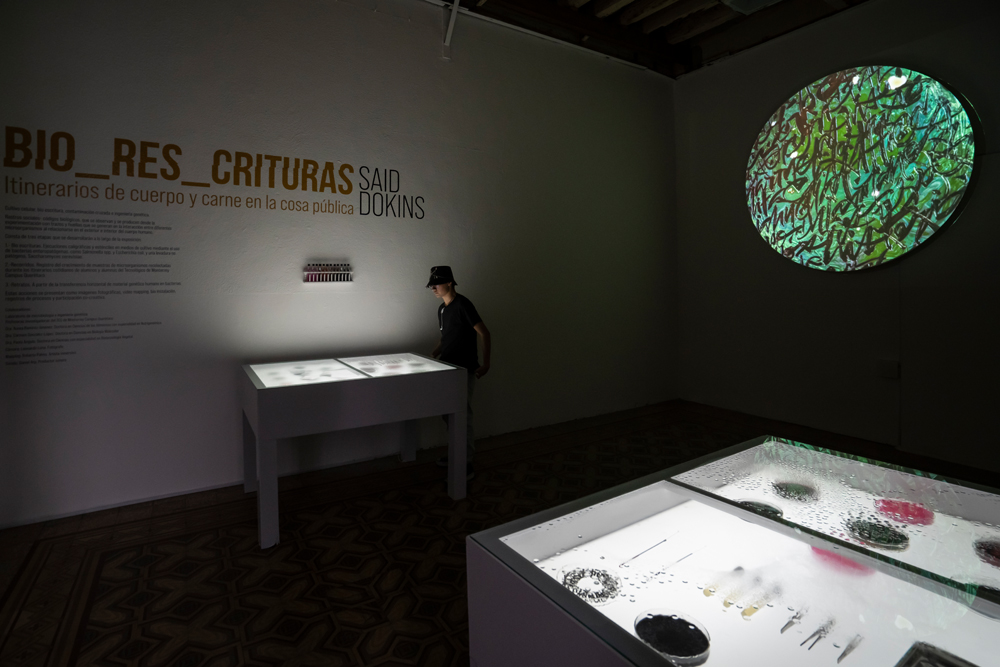
[tp not_in=”es”]Said Dokins’ Bio-rescrituras project is an exploration of the human body as a permeable entity, influenced by the latest discoveries in the study of the human microbiome. Through this lens, the body is seen as a constantly evolving entity, shaped by interactions between tissues, cells, genes, bacteria, enzymes, and other semi-living entities. These micro-interactions give rise to negotiations for different functions, ultimately shaping and reconstructing the body as a whole.
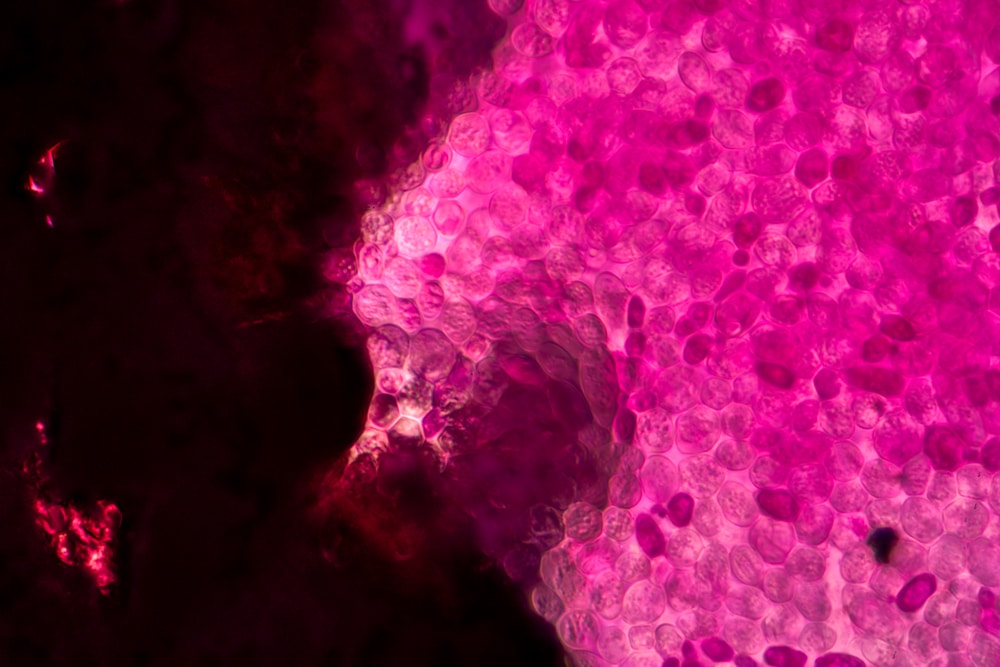
Current research on the microbiome confirms that microorganisms exist symbiotically with the human body, in a constant exchange of information through chemical signals that elicit responses in various metabolic centers. This leads to a better understanding of the human body as an ecological unit, a holobiont in constant feedback with its environment.
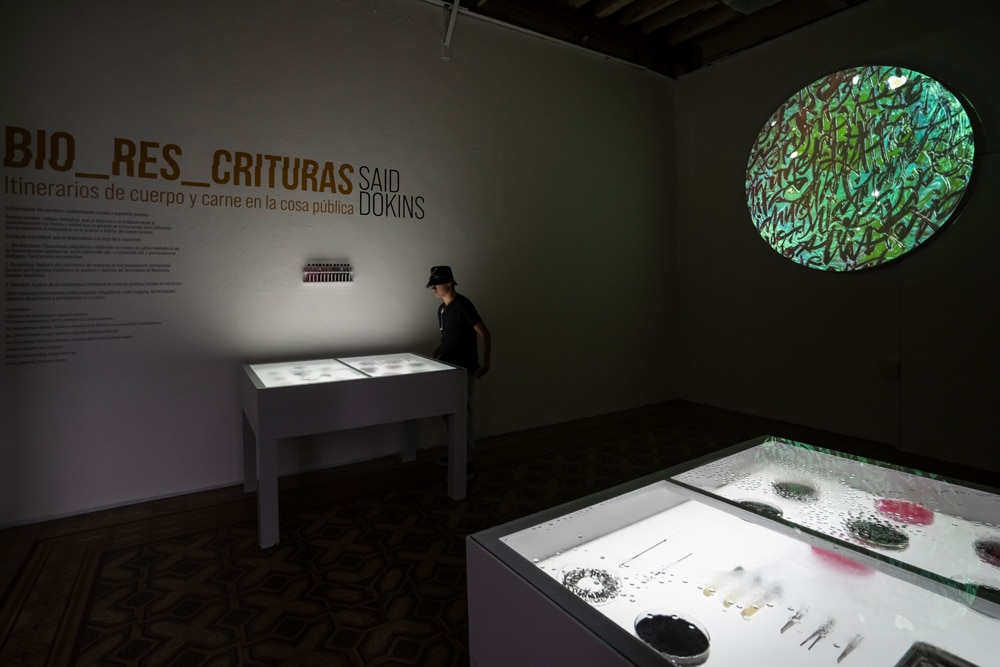
Through his work, Dokins aims to challenge traditional notions of the body as a closed, individualized entity, exploring the interconnectivity between the human body, microbiome, and the environment through a micro-performative exercise that analyzes and relates to the scientific knowledge production process.
It consists of three phases and presents itself as an audiovisual installation that updates as the exhibition progresses.
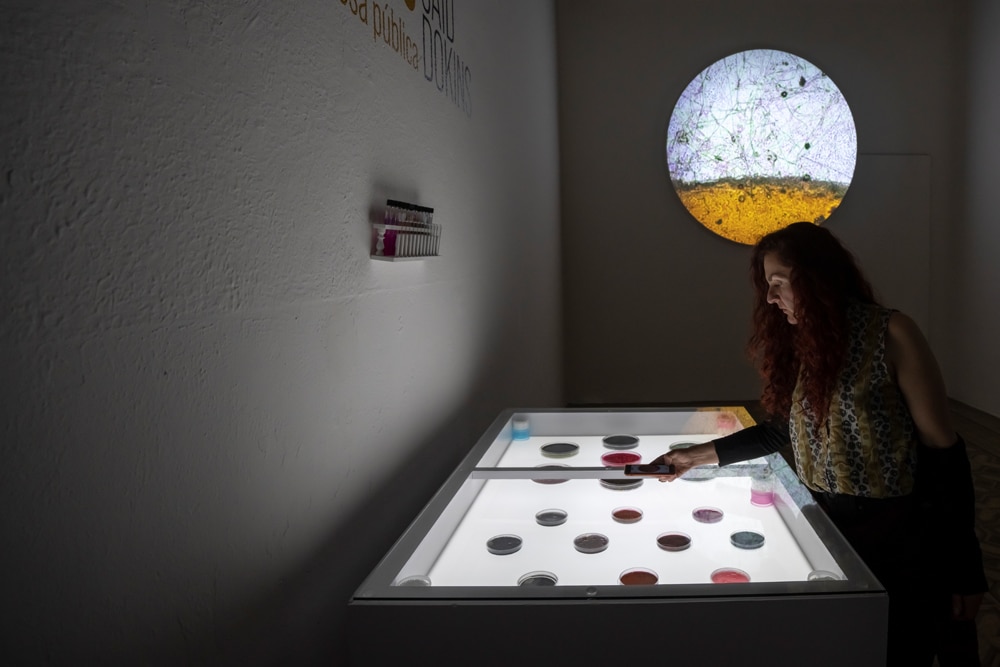
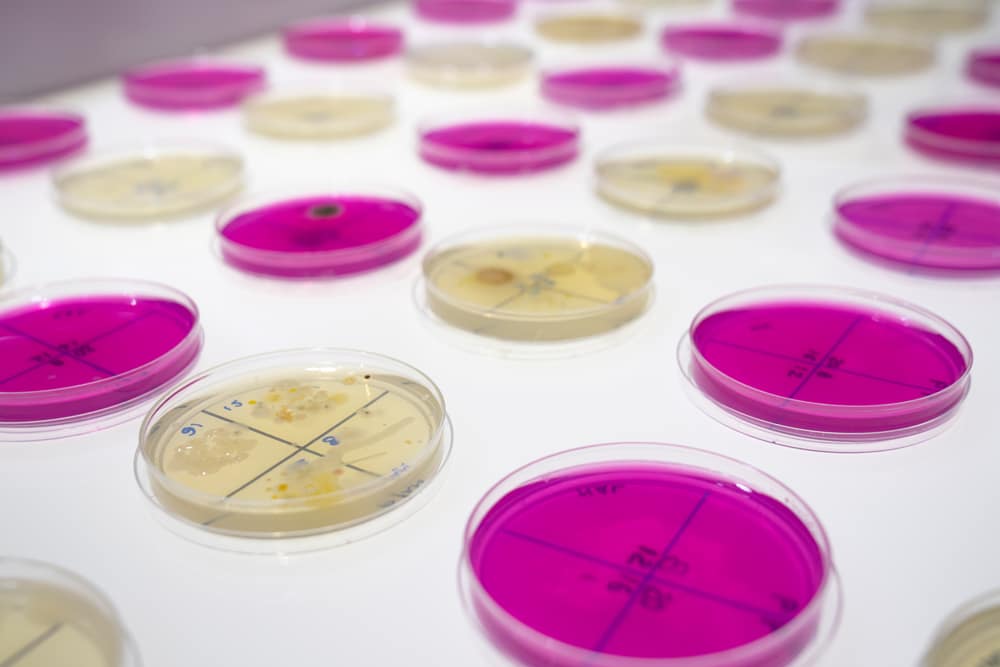
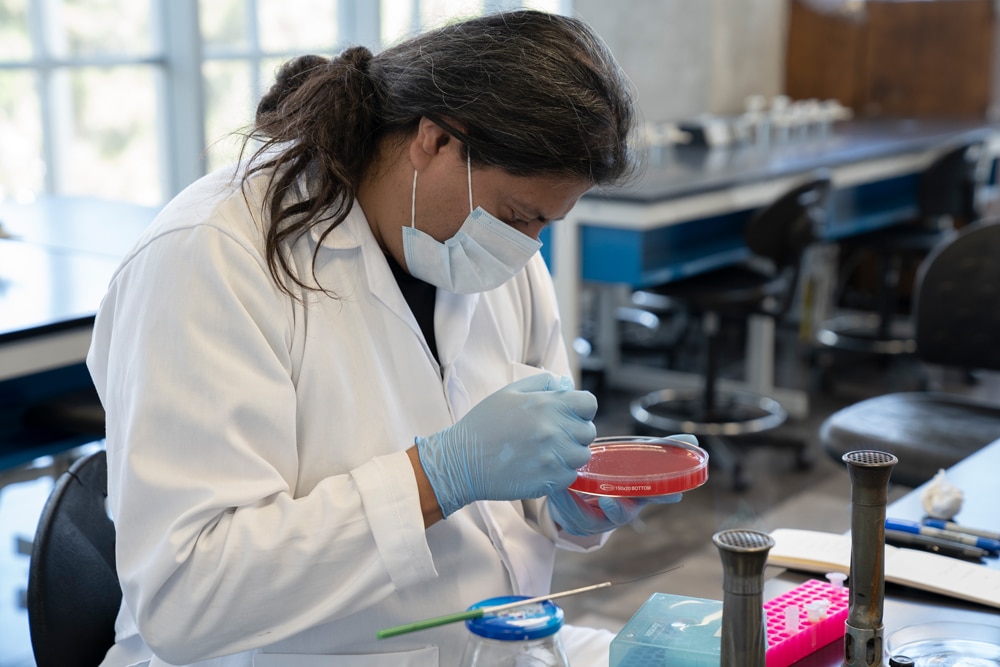
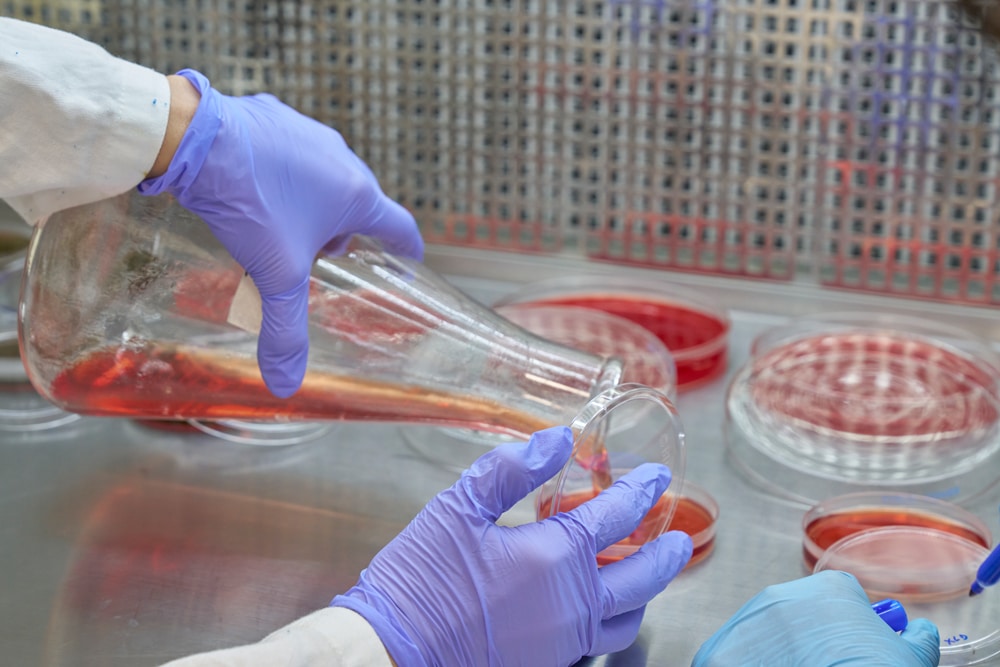
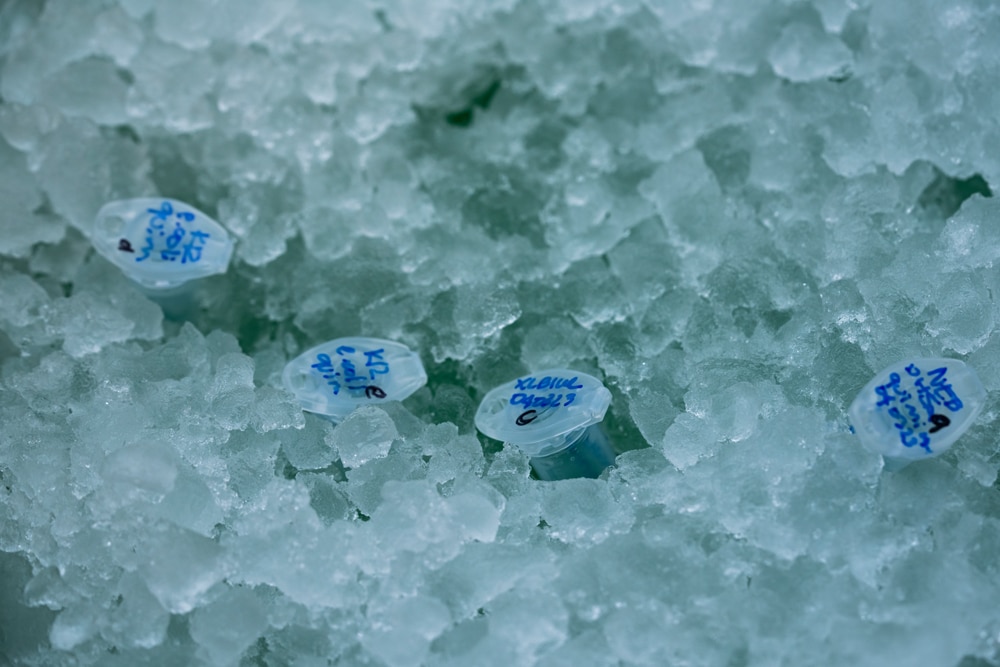
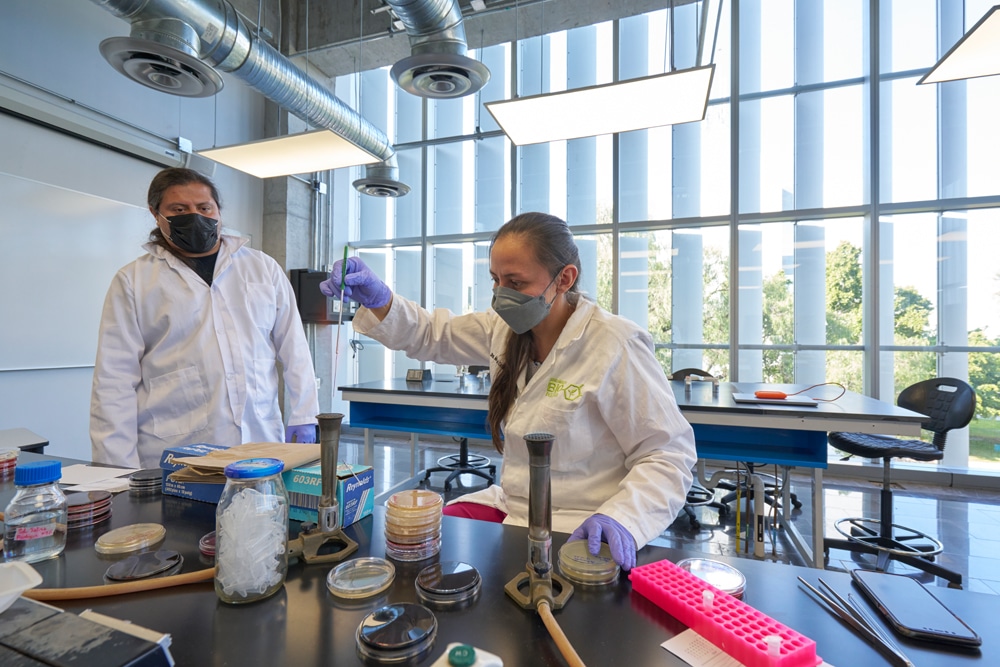
Itinerarios aimed to document the microbiological patterns of the daily itineraries of 15 students from Tecnológico de Monterrey. Participants deposited their handprints on agar plates, which were then incubated to visualize the growth of microorganisms. The resulting microbial growth was displayed over several days, creating a dynamic microbial fingerprint dependent on geographic space.
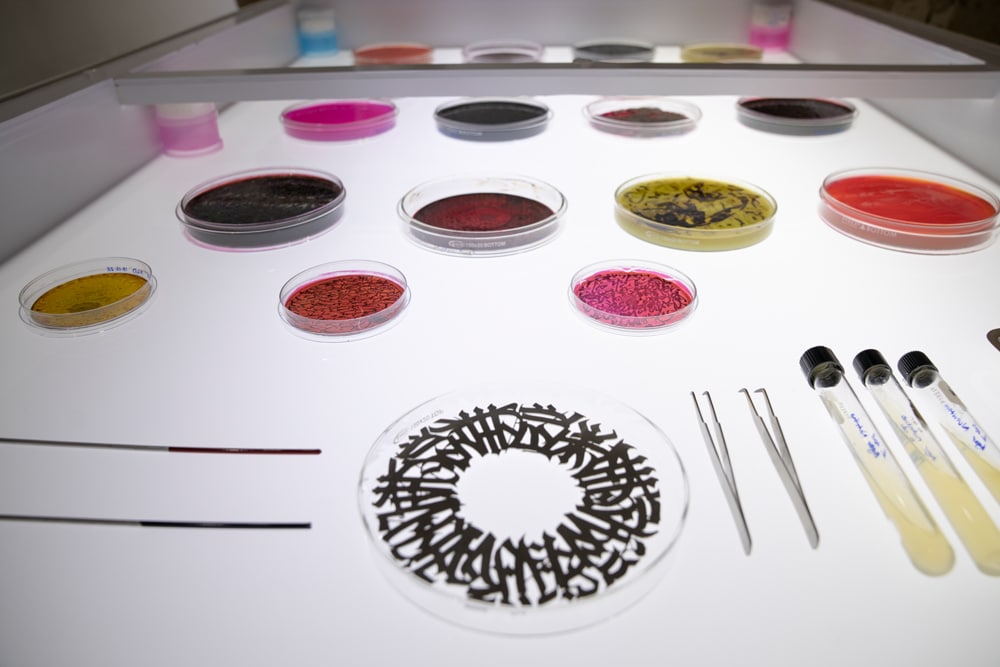
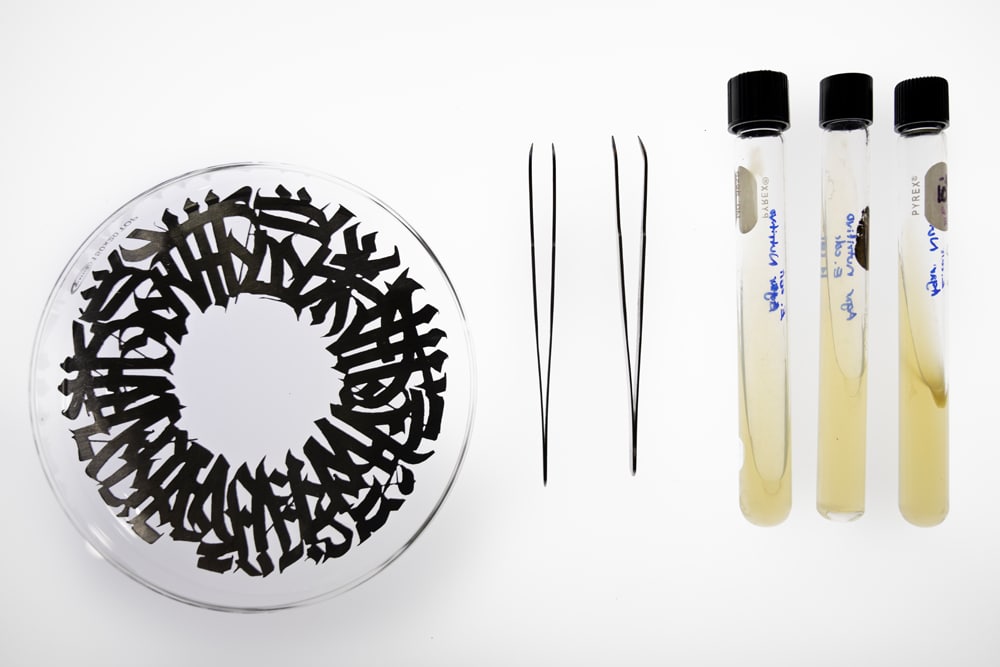
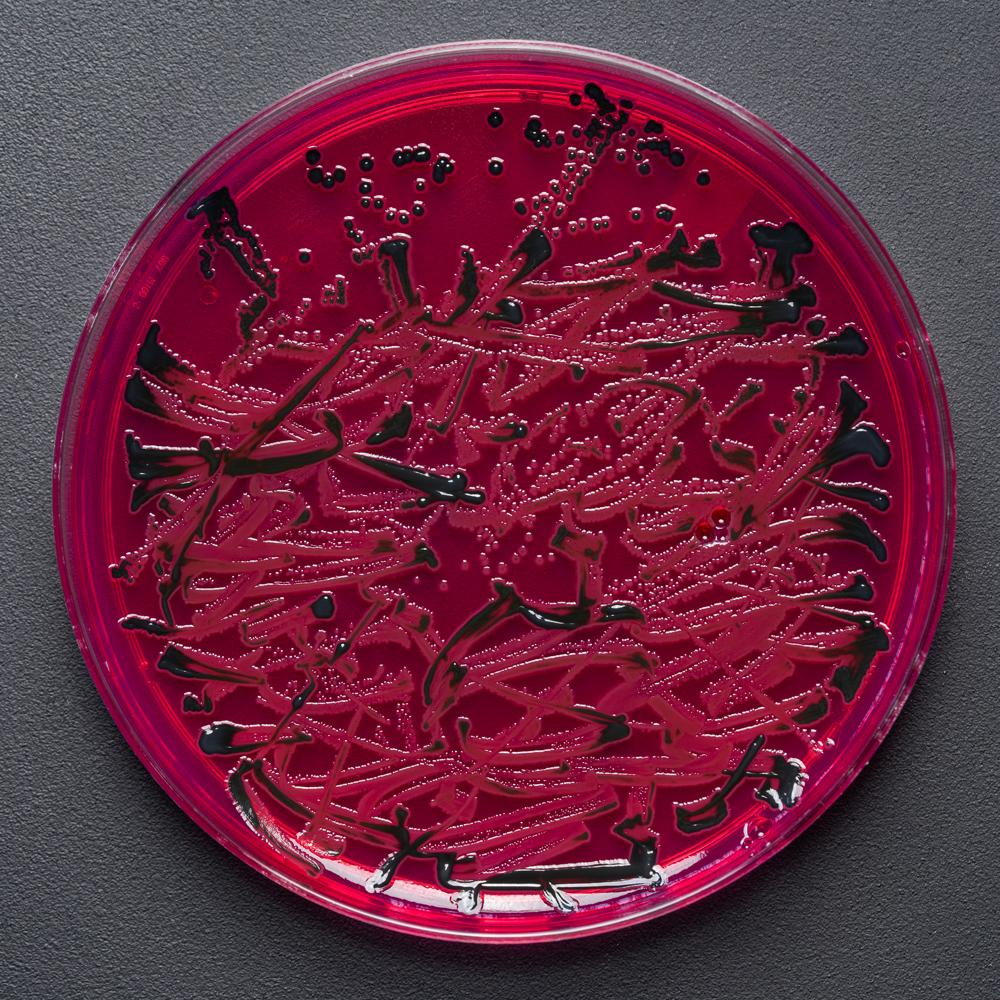
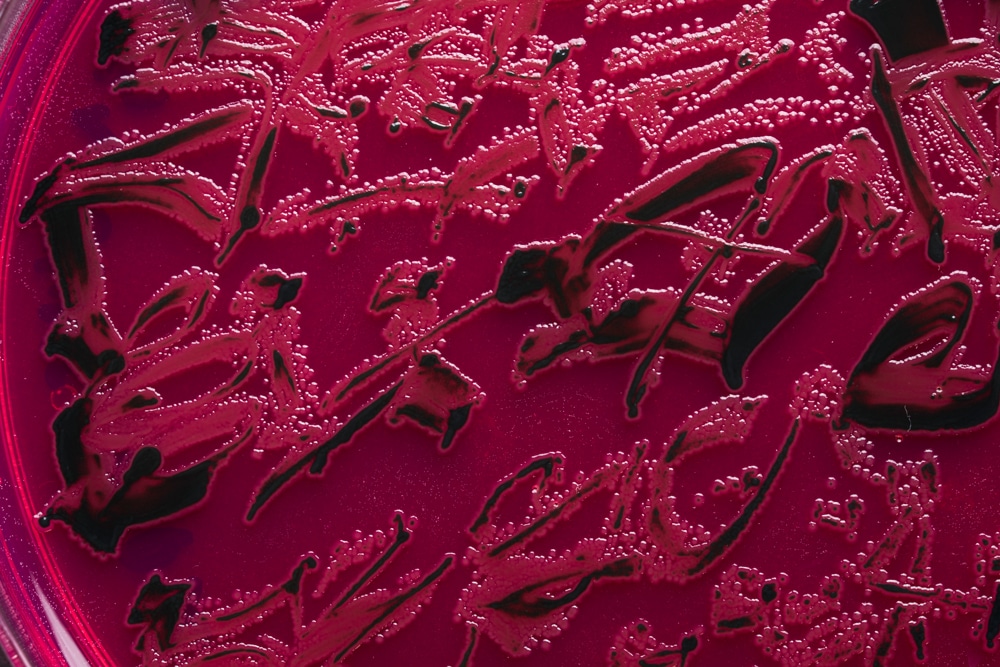
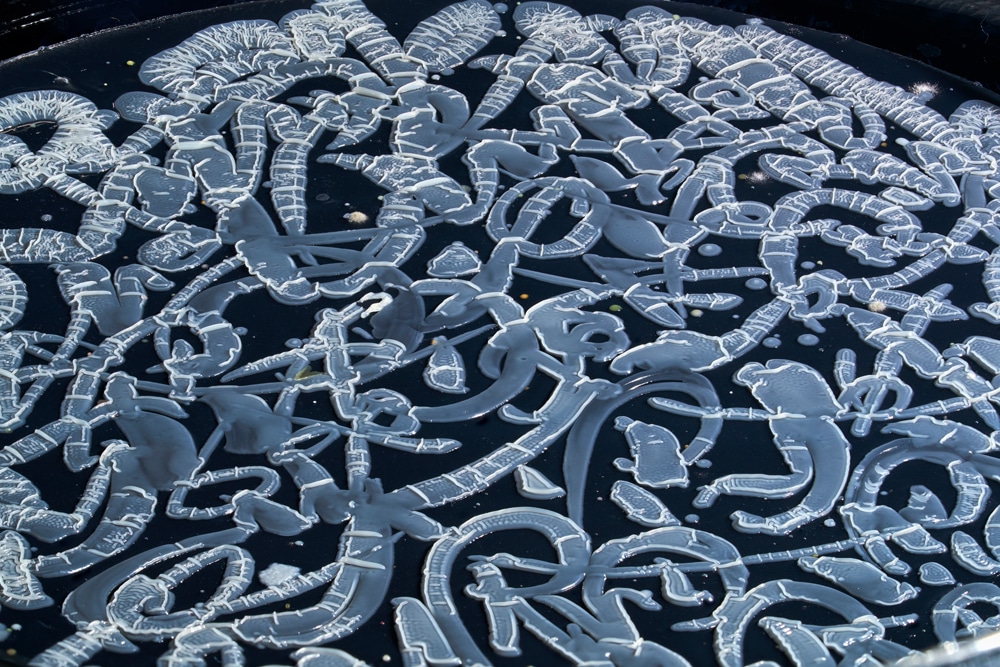
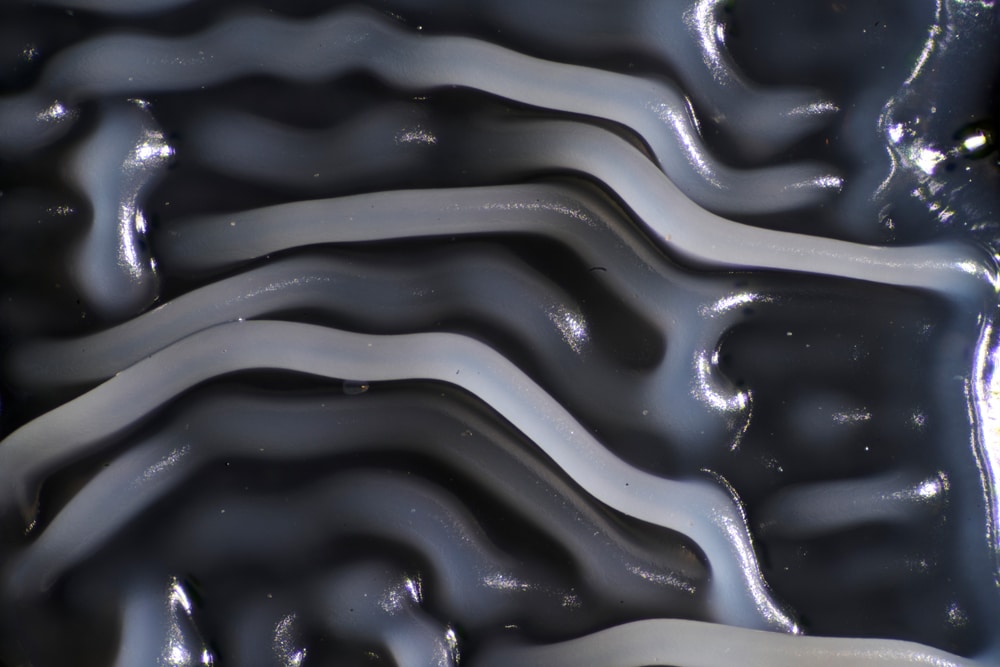
Both the bio-writings and bio-stencils operate from an abstract language that challenges conventional norms and structures towards a new dialogue between the written and the living. Microorganisms find within the scriptural pattern a medium in which they can live and reproduce, becoming a kind of bacteriological ink, a starting point for a writing that is overflowing, intermingled, hybrid, where death and life still coexist in a constant relationship. This challenges the traditional binary between living and non-living, and instead presents a dynamic and interconnected relationship between the microbial world and human cultural production. It opens up possibilities for exploring alternative modes of communication and meaning-making that take into account the entanglements between the microbiome, the environment, and human bodies.
Horizontal gene transfer is a powerful tool in biotechnology and genetic engineering, enabling the modification of genetic material directly from one organism to another.
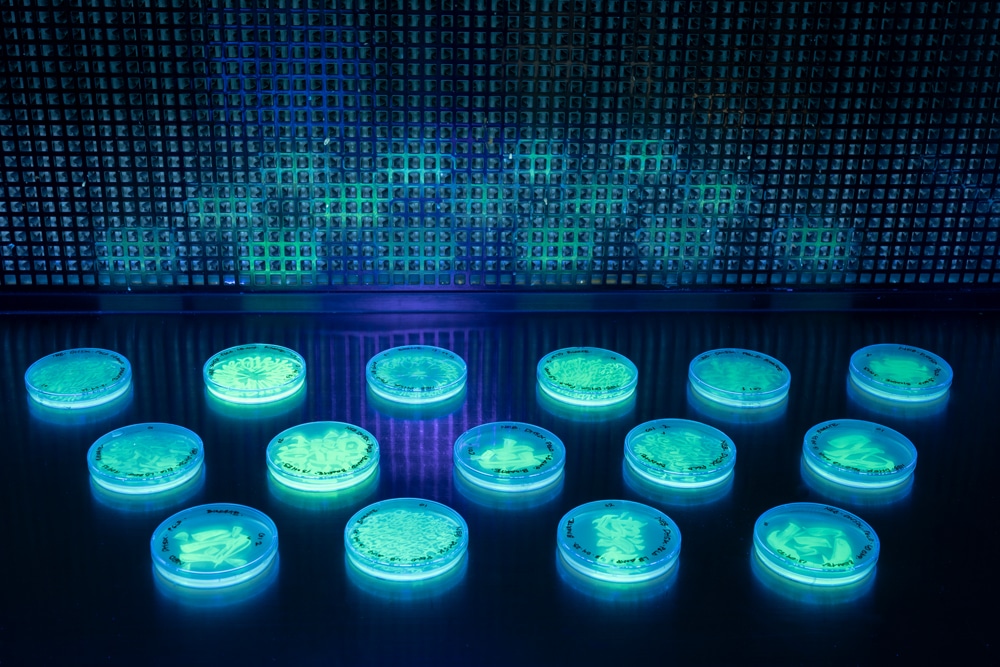
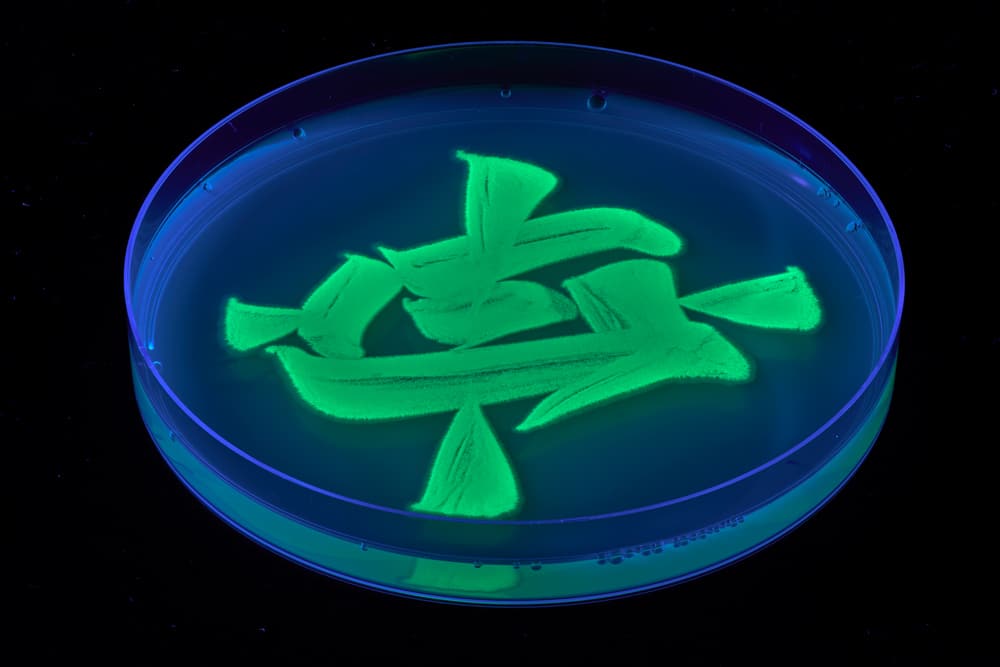
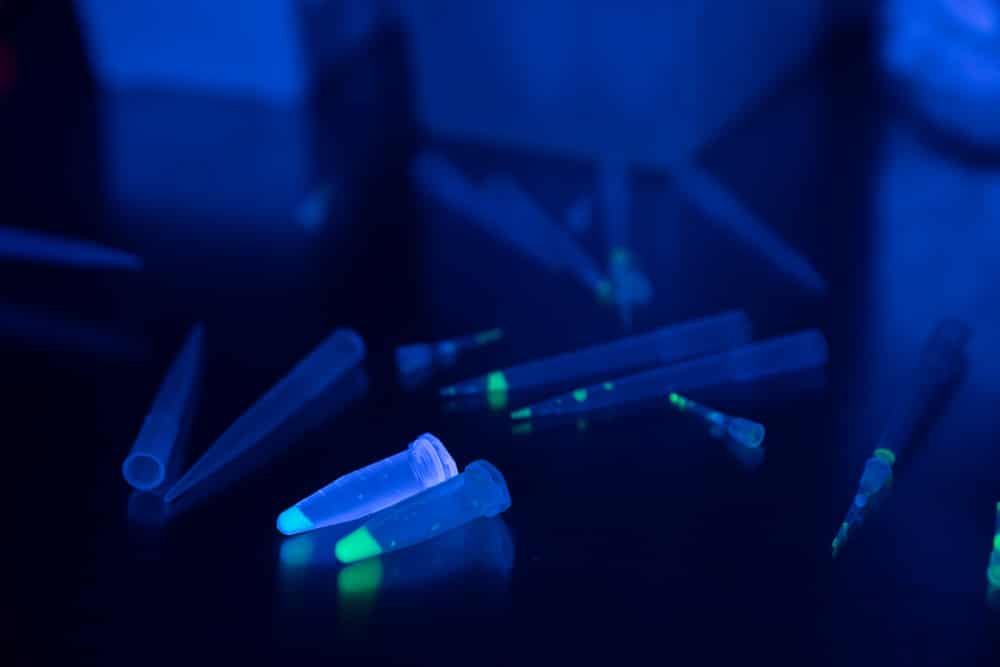
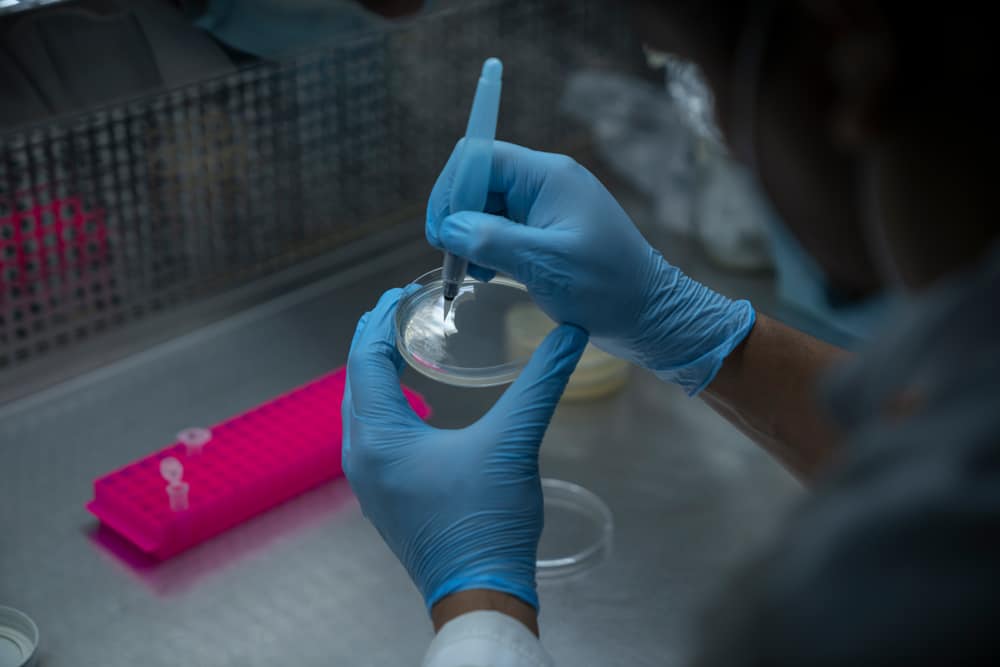
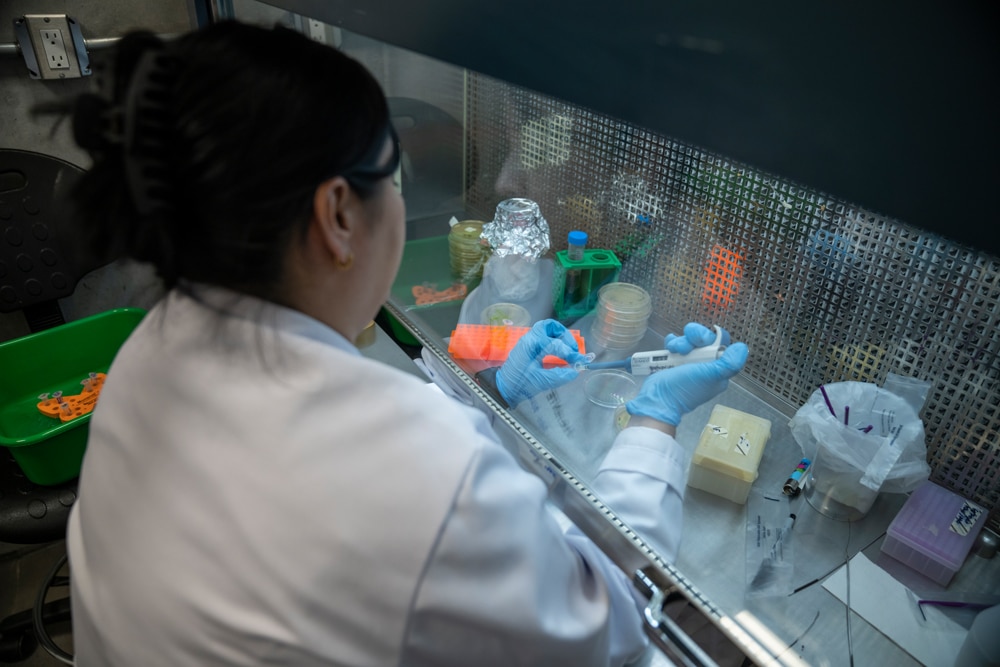
The technique of horizontal gene transfer, which involves the direct exchange of genetic material between bacteria, was used as a mechanism of information exchange in the bio-writing experiment. This allowed for the insertion of the gene that produces green fluorescent protein into a strain of E. coli, making the bacteria bioluminescent. These bioluminescent bacteria were then used as a form of bio-ink for calligraphic exercises on petri dishes, which were later exposed to ultraviolet light for visualization.
In his latest project, Bio-rescrituras, Said Dokins delves into the fascinating world of the human microbiome, using bioart as a medium to explore the dynamic interactions between the human body and its microorganisms.
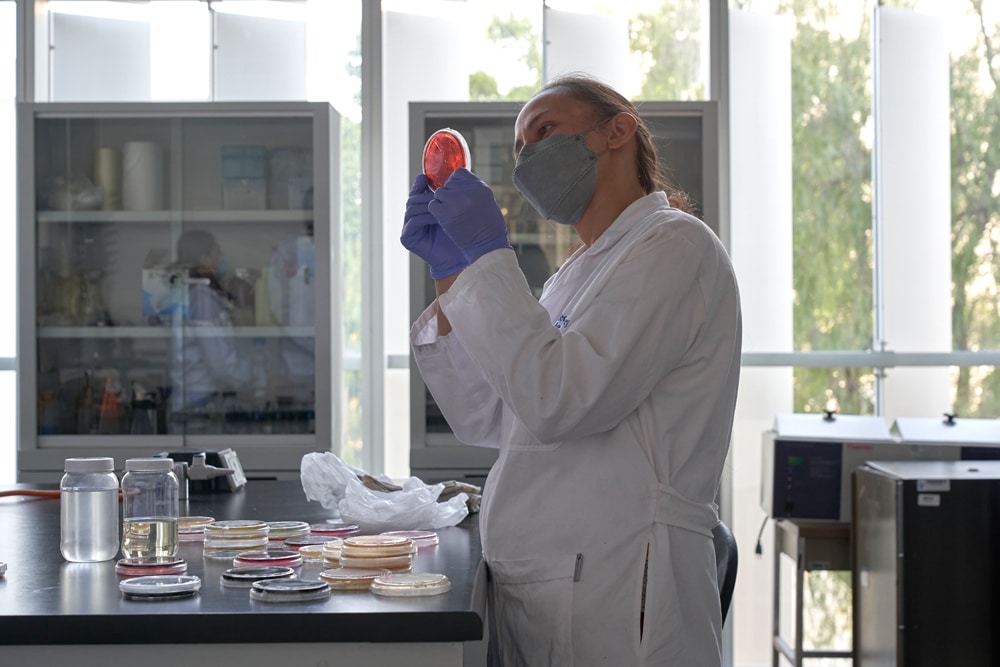
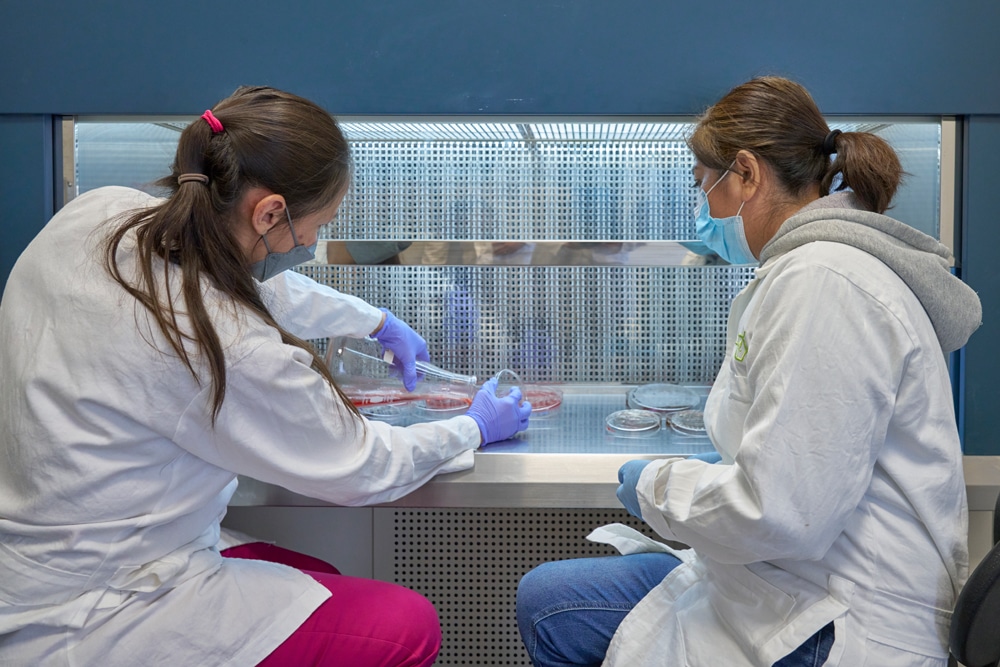
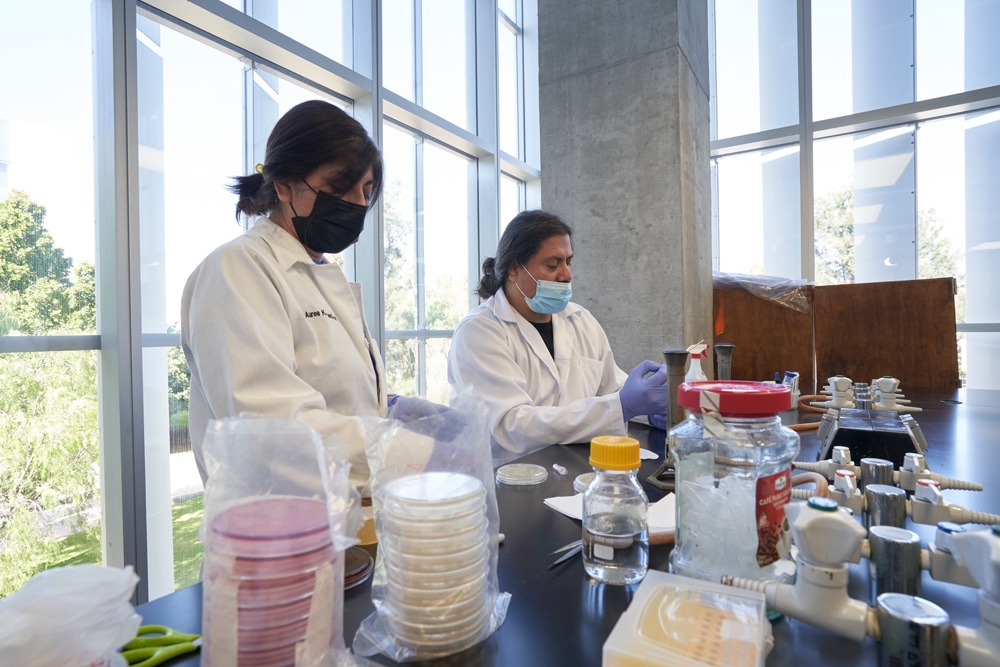
Laboratory, Microbiology, and Genetic Engineering. Research Professors from the TEC de Monterrey Campus Querétaro:
Dr. Aurea Ramírez. Food Industry Engineer with specialization in Food Science.
Dr. Carmen González. Pharmaceutical Chemist with specialization in Molecular Biology.
Dr. Paola Angulo. Doctor of Science with specialization in Plant Biotechnology.
Camera, Mapping and Sound:
Leonardo Luna: Photographer.
Roberto Palma. Immersive Artist.
Daniel Arp: Sound Producer.
Checkout another projects by Said Dokins[/tp]
[tp not_in=”en”]El proyecto Bio-rescrituras de Said Dokins es una exploración del cuerpo humano como entidad permeable, influida por los últimos descubrimientos en el estudio del microbioma humano. A través de esta lente, el cuerpo se ve como una entidad en constante evolución, formada por interacciones entre tejidos, células, genes, bacterias, enzimas y otras entidades semivivientes. Estas microinteracciones dan lugar a negociaciones para diferentes funciones, que finalmente dan forma y reconstruyen el cuerpo como un todo.
Las investigaciones actuales sobre el microbioma confirman que los microorganismos existen en simbiosis con el cuerpo humano, en un constante intercambio de información a través de señales químicas que provocan respuestas en varios centros metabólicos. Esto conduce a una mejor comprensión del cuerpo humano como unidad ecológica, un holobionte en constante retroalimentación con su entorno.
A través de su trabajo, Dokins pretende desafiar las nociones tradicionales del cuerpo como una entidad cerrada e individualizada, explorando la interconectividad entre el cuerpo humano, el microbioma y el medio ambiente a través de un ejercicio microperformativo que analiza y relaciona el proceso de producción de conocimiento científico.
Consta de tres fases y se presenta como una instalación audiovisual que se actualiza a medida que avanza la exposición.
Itinerarios corporales: exploración de paisajes microbianos del movimiento humano y patrones bacterianos en el espacio público
Itinerarios tuvo como objetivo documentar los patrones microbiológicos de los itinerarios diarios de 15 estudiantes del Tecnológico de Monterrey. Los participantes depositaron sus huellas de manos en placas de agar, que luego se incubaron para visualizar el crecimiento de microorganismos. El crecimiento microbiano resultante se mostró durante varios días, creando una huella microbiana dinámica dependiente del espacio geográfico.
Bio-escrituras, bioesténciles y patrones bacterianos en medios de cultivo. Explorando la intersección de la escritura y la microbiología
Tanto las bioescrituras como los biostencils operan desde un lenguaje abstracto que desafía las normas y estructuras convencionales hacia un nuevo diálogo entre lo escrito y lo vivo. Los microorganismos encuentran en el patrón escritural un medio en el que pueden vivir y reproducirse, convirtiéndose en una especie de tinta bacteriológica, punto de partida de una escritura desbordante, entremezclada, híbrida, donde la muerte y la vida aún conviven en una relación constante. Esto desafía el binario tradicional entre lo vivo y lo no vivo y, en cambio, presenta una relación dinámica e interconectada entre el mundo microbiano y la producción cultural humana. Abre posibilidades para explorar modos alternativos de comunicación y creación de significado que tengan en cuenta los enredos entre el microbioma, el medio ambiente y los cuerpos humanos.
Caligrafía bioluminiscente: El potencial de las bacterias bioluminiscentes en la caligrafía mediante ingeniería genética
La transferencia horizontal de genes es una poderosa herramienta en biotecnología e ingeniería genética, que permite la modificación de material genético directamente de un organismo a otro.
La técnica de transferencia horizontal de genes, que implica el intercambio directo de material genético entre bacterias, se utilizó como mecanismo de intercambio de información en el experimento de bioescritura. Esto permitió la inserción del gen que produce la proteína fluorescente verde en una cepa de E. coli, lo que hizo que la bacteria fuera bioluminiscente. Estas bacterias bioluminiscentes se utilizaron luego como una forma de biotinta para ejercicios caligráficos en placas de Petri, que luego se expusieron a la luz ultravioleta para su visualización.
Colaboradores:
Laboratorio, microbiología e ingeniería genética:
Profesoras investigadoras del TEC de Monterrey Campus Querétaro:
Dra. Aurea Ramírez. Ingeniera en Industrias Alimentarias con especialidad en Ciencias de los Alimentos
Dra. Carmen González. Química Farmacéutica con especialidad en Biología Molecular.
Dra. Paola Angulo. Doctora en Ciencias con especialidad en Biotecnología Vegetal.
Cámara:
Leonardo Luna: Fotógrafo.
Mapping:
Roberto Palma. Artista inmersivo.
Sonido:
Daniel Arp: Productor sonoro[/tp]